
The choice clearly is between prompt corrective action and slow but sure destruction, says Tamal Bandyopadhyay.
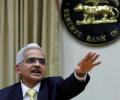
'The banking sector appears to be on course to recovery,' declares the RBI governor.

Hyderabad-based Andhra Bank is aiming to get a significant proportion of the state government's business, to boost its share of low-cost deposits
P S Jayakumar, managing director and chief executive officer, Bank of Baroda, speaks to Abhijit Lele & Hamsini Karthik about loan recoveries, sounding more confident than a year before.
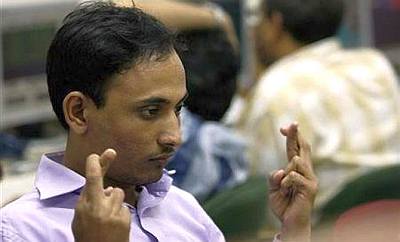
Investors remain cautious ahead of F&O expiry.

Indian companies are in a precarious financial position.

There are also signs that the private sector investment cycle is slowly coming back, as capacity utilisation figures across industry continue to slowly creep up. A pickup in investments will front load profitability, says Akash Prakash.

Investors were stuck in old schemes though they were suspended because of tax implications.

Laggards yet, a number of smaller PSBs in the category have balance sheets which do not give much comfort.
Laggards yet, a number of smaller PSBs in the category have balance sheets which do not give much comfort.

Banks are in need of government support to manage the stressed assets
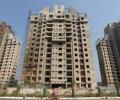
Govt relaxed norms for the floor area ratio and ground coverage for plots.

There are some 20-odd schemes with this default provision, or something close to it.

The trust deficit has widened with buyers losing confidence in a developer's ability to construct and deliver a project on time.

The economists who signed the letter included Jean Drze , Abhijit Banerjee, Ajit Ranade, Jayati Ghosh, Kirit Parikh, Mihir Shah, Rohini Pande, and Vijay Joshi

There are high hopes that the Budget for 2014-15 to be presented in Parliament may actually not tinker with the threshold limit or the other tax slabs but could provide reliefs by incentivising savings.

IMF attributes the slower growth rate to supply-side bottlenecks.
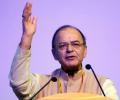
Is the Budget sufficiently prudent? It probably is but at the cost of substantial under-provisioning for the many grand sounding schemes announced in it, says Nitin Desai.

She also accused the Union government of making "false claims" about crop insurance benefits to the farmers, even as the state government was bearing 80 per cent of the cost.

Bankers need to take a call on whether they will allow technology firms to run banks or banks themselves will turn into tech firms, says Tamal Bandyopadhyay.

Parts of electric cars are costlier and repairing often means replacing an entire system, which drives insurance premium rates up.

Enhanced revenue generation is a priority for the government.

However, the budget arithmetic is slightly optimistic.
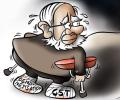
While GST and insolvency laws are among the major achievements of the Modi government, the list of failures include demonetisation, toxic banks, manufacturing hiccups and most prominently bizarre job creation figures. Mihir S Sharma takes a look at the four years of Modi government.

The regulator has made it mandatory for insurers to have a minimum percentage of motor third-party business underwritten.

Several speakers noted that Budget carried the weight of expectations.

RBI governor on the stress in public sector bank due to NPAs, and what is needed to be done to get the system back on track.

Single window clearances for realty must.

The report suggested that the tariffs can be made simple and transparent.

Encouraging domestic financial savings through focused measures would help mobilise long term resources for funding infrastructure and economic development.

The need to allow government shareholding in public sector banks to come down below 51 per cent

Softening the demonetisation blow, the Budget for 2017-18 on Wednesday halved the tax to 5 per cent on incomes up to Rs 500,000 but proposed a new surcharge of 10 per cent on incomes between Rs 50 lakh and Rs 1 crore and raised duties on cigarettes and pan masala while stepping up allocations for infrastructure, rural, agriculture and social sectors.

Only three percent of Indians pay income tax; our tax-GDP ratio is among the lowest in the world. This must change. Our elites must realise that India's poverty has damaging consequences for them, and that they can help decrease it. The food security bill, with all its limitations, will hopefully contribute to generating such awareness, says Praful Bidwai.

The government has provided a long-term vision.
 © 2026 Rediff.com - Advertise with us - Disclaimer - Privacy Policy - Sitemap - Feedback - About us - Terms of use - Grievances